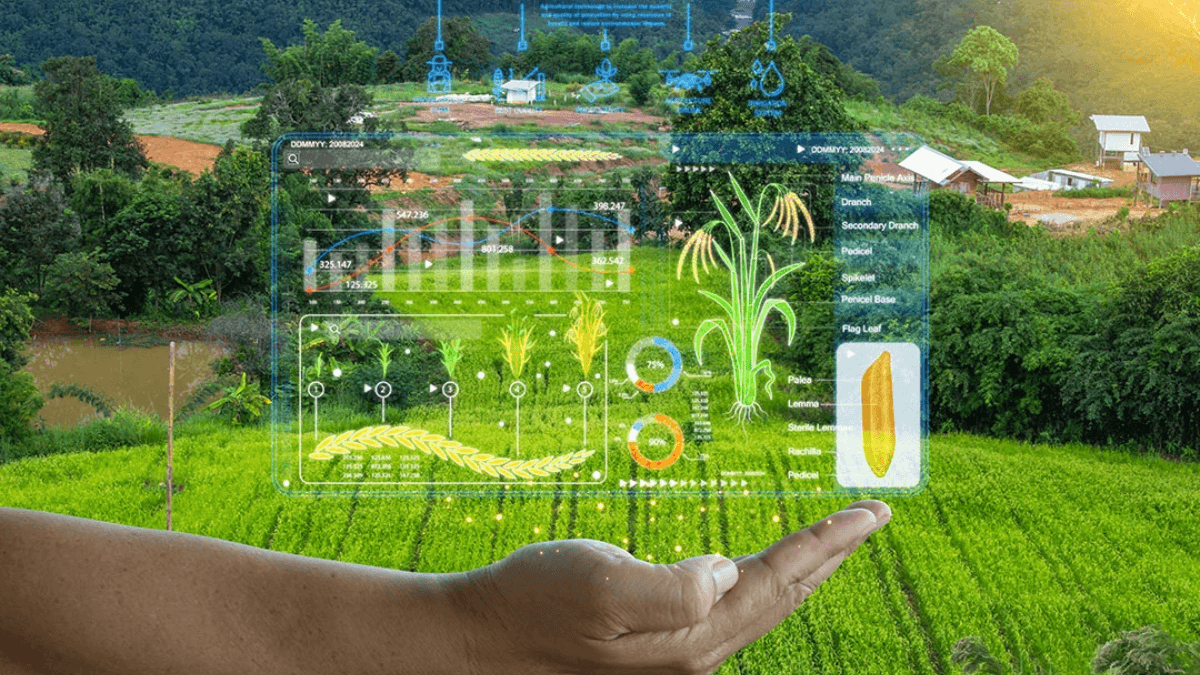


Agricultural technology is moving beyond traditional machinery towards connected devices that help farmers monitor field conditions, manage resources, and make informed decisions. Soil sensors, weather monitoring stations, automated irrigation controllers, and equipment tracking devices are becoming important parts of modern farming systems. However, these products must operate reliably in environments where connectivity, power availability, temperature, and physical conditions can change significantly. This makes Firmware Development for Agricultural IoT an important part of building dependable smart agriculture solutions.
For product developers, the challenge is not simply collecting sensor readings. Devices must process data accurately, communicate efficiently, manage energy consumption, and continue operating when network connectivity becomes unavailable. Poor firmware decisions can lead to unreliable readings, communication failures, and unnecessary maintenance.
At Waferlabs, we approach these challenges through embedded systems and firmware engineering, considering device requirements alongside hardware interfaces and operating conditions. In this article, we explore the key firmware considerations, common engineering challenges, and how a structured development approach can help businesses build practical agricultural IoT products.
1. Understanding the Role of Firmware in Agricultural IoT Devices
Agricultural IoT products depend on embedded devices that collect information from the field and respond to changing conditions. Firmware determines how these devices interact with sensors, process readings, manage power, and communicate with external systems.
For example, a soil monitoring device may collect moisture, temperature, and humidity readings at scheduled intervals. Its firmware must read the sensor data, validate the measurements, store information when necessary, and transmit it to a gateway or cloud platform.
This is where Firmware Development for Agricultural IoT becomes important. The firmware must translate hardware capabilities into dependable device behavior.
Connecting sensors with embedded controllers
Agricultural devices may use several sensor types, including:
- Soil moisture sensors: Measure moisture levels to support irrigation decisions.
- Temperature sensors: Monitor soil, water, or surrounding air conditions.
- Humidity sensors: Provide information about environmental moisture.
- Light sensors: Measure sunlight exposure.
- pH sensors: Help monitor soil or water acidity.
- Weather sensors: Collect rainfall, wind, and atmospheric information.
Each sensor may have different communication and calibration requirements. Firmware must interpret the data correctly and account for invalid readings, sensor disconnections, and measurement variations.
At Waferlabs, we consider these requirements during embedded system design so that firmware architecture, hardware interfaces, and sensor selection work together.
Controlling automated agricultural equipment
Some agricultural IoT products do more than monitor conditions. They can control pumps, valves, motors, and other equipment.
For example, an irrigation controller may receive moisture readings and activate a water valve when configured conditions are met. The firmware must manage the control output, monitor device status, and respond safely if a sensor or communication link fails.
A carefully planned approach to Firmware Development for Agricultural IoT helps make these operations predictable and easier to maintain.
2. Major Engineering Challenges in Agricultural IoT Firmware
Agricultural devices operate in conditions that differ considerably from indoor consumer electronics. They may be installed in open fields, greenhouses, irrigation systems, or remote locations.
This creates practical engineering challenges that must be considered early in Firmware Development for Agricultural IoT projects.
Handling environmental conditions
Agricultural equipment may experience:
- High and low temperatures.
- Moisture and humidity.
- Dust and soil exposure.
- Electrical noise from nearby equipment.
- Vibration and mechanical movement.
- Changes in power availability.
Firmware cannot compensate for every hardware limitation. However, it can monitor operating conditions, detect abnormal states, and respond according to predefined rules.
For instance, if a sensor begins returning readings outside its expected range, the device should identify the abnormal data instead of automatically treating it as a valid measurement.
Managing unreliable connectivity
Remote agricultural locations may not have consistent internet or cellular coverage. Devices may use LoRaWAN, cellular connectivity, Wi-Fi, or other communication technologies depending on the deployment.
An effective Firmware Development for Agricultural IoT strategy should not assume that every transmission will succeed.
A practical design may include:
- Local data storage when the network is unavailable.
- Scheduled communication attempts.
- Message queues for pending readings.
- Retry limits and timeout management.
- Data synchronization after connectivity returns.
This approach helps prevent temporary network interruptions from becoming permanent data loss.
Handling inconsistent sensor readings
Sensor readings may fluctuate because of installation conditions, calibration differences, or hardware faults. Firmware should validate measurements and identify readings that require attention.
For businesses building smart farming products, these considerations influence device reliability and the quality of information delivered to users.
3. Designing Low-Power Firmware for Remote Agricultural Devices
Power consumption is one of the most important considerations for agricultural IoT products. A sensor installed across a large farm may need to operate for extended periods without frequent maintenance.
That makes power optimization an essential part of Firmware Development for Agricultural IoT.
Use sleep modes effectively
Many microcontrollers provide low-power modes that reduce energy consumption when the device is not performing active operations.
A soil monitoring device, for example, may follow this sequence:
- Wake up at a scheduled interval.
- Activate the required sensor.
- Collect and validate measurements.
- Store the readings locally.
- Transmit the data if communication is scheduled.
- Return to a low-power state.
The timing and frequency of these operations should reflect the application’s actual requirements.
Optimize sensor activation
Some sensors consume more power during measurement than during standby. Firmware can control when these sensors receive power, provided the hardware design supports it.
For example, a battery-operated device may power a sensor only when collecting a reading rather than keeping it active continuously.
Choose suitable communication intervals
Frequent wireless transmissions can increase power consumption. However, sending data too infrequently may reduce the usefulness of the monitoring system.
The correct balance depends on the application. A greenhouse monitoring device may require more frequent updates than a remote soil monitoring station.
At Waferlabs, we consider processor capabilities, sensor behavior, communication requirements, and battery constraints when approaching Firmware Development for Agricultural IoT. This helps businesses make practical decisions instead of optimizing one component in isolation.
Key takeaway: Low-power firmware requires coordination between hardware selection, sensor operation, processing schedules, and wireless communication.
4. Communication Protocols and Data Management
Agricultural IoT products often operate as part of a larger connected system. Devices collect information and communicate with gateways, mobile applications, or cloud platforms.
The communication architecture must therefore be considered during Firmware Development for Agricultural IoT.
Selecting the right communication technology
Different technologies support different deployment requirements.
| Technology | Potential application |
|---|---|
| LoRaWAN | Long-range, low-power sensor networks |
| Wi-Fi | Greenhouses and locations with available wireless infrastructure |
| Cellular | Remote devices with suitable network coverage |
| Bluetooth Low Energy | Local configuration and maintenance |
| Ethernet | Fixed installations with wired network access |
The choice depends on coverage, energy consumption, data volume, installation costs, and network availability.
For example, a farm deploying hundreds of low-data-rate soil sensors may consider LoRaWAN, while a greenhouse with existing network infrastructure may use Wi-Fi.
Design reliable data handling
Firmware should define how readings are packaged, timestamped, stored, and transmitted. It should also consider what happens when messages are delayed or duplicated.
A good implementation may include:
- Device identification.
- Timestamp management.
- Data validation.
- Local buffering.
- Message sequence tracking.
- Communication error reporting.
These elements make Firmware Development for Agricultural IoT more dependable and help downstream applications interpret device data correctly.
Support remote configuration
Agricultural devices may be installed across large areas. Requiring technicians to visit every device for minor configuration changes can increase maintenance costs.
Where the architecture supports it, firmware can allow authorized remote configuration of measurement intervals, communication settings, and operating parameters.
Such features should include suitable access controls and validation to prevent incorrect settings from disrupting device operation.
5. Firmware Architecture for Smart Irrigation and Precision Farming

Agricultural IoT products may be designed for monitoring, automation, or both. Their firmware architecture should reflect the actual operating requirements rather than using a generic design for every device.
Smart irrigation controllers
A smart irrigation controller may receive moisture readings and control water valves or pumps.
Its firmware may need to:
- Read moisture sensor values.
- Apply configured thresholds.
- Check sensor validity.
- Control output signals.
- Monitor actuator status where supported.
- Report operating conditions.
- Enter a defined safe state when faults occur.
For example, if the sensor becomes disconnected, the controller should not continue making irrigation decisions based on an invalid reading. The appropriate response depends on the system’s safety requirements and operational policy.
Greenhouse automation
Greenhouse devices may monitor temperature, humidity, lighting, and ventilation. Depending on the product, firmware may control fans, lighting circuits, or other equipment.
A modular approach to Firmware Development for Agricultural IoT makes it easier to add sensors and control features without redesigning the complete firmware structure.
Precision farming equipment
Some agricultural products collect information from moving machinery or field equipment. These devices may need to coordinate sensors, location information, wireless communication, and local processing.
The firmware must account for changing operating conditions and ensure that data is captured consistently.
At Waferlabs, we consider these use cases during embedded product development so that the architecture supports the intended application and future product requirements.
6. Testing and Validating Agricultural IoT Firmware
A device may work correctly in a laboratory but behave differently after installation in a field. Changes in temperature, connectivity, power availability, and sensor conditions can expose problems that ordinary functional tests do not identify.
Testing is therefore a critical stage of Firmware Development for Agricultural IoT.
Functional testing
Each firmware feature should be tested against its requirements. This includes sensor readings, control outputs, communication routines, and device configuration.
For instance, a moisture monitoring device should be tested with expected readings, invalid inputs, sensor disconnections, and measurement boundary conditions.
Communication testing
Engineers should verify how the device behaves when:
- A wireless connection becomes unavailable.
- A gateway stops responding.
- Messages are delayed.
- Repeated transmissions occur.
- The device reconnects after an interruption.
The purpose is to confirm that the firmware can recover without losing track of device state or creating unnecessary communication activity.
Power and endurance testing
Battery-powered devices should undergo tests that measure consumption during active operation, communication, and sleep modes.
Long-duration testing can also reveal problems such as memory leaks, unstable task scheduling, and unexpected resets.
Hardware integration testing
The firmware must be tested with the actual microcontroller, sensors, power circuitry, and communication modules. Simulated testing is useful, but it cannot replace validation on the intended hardware.
A structured testing process helps identify defects before products are deployed across farms or agricultural facilities.
7. Planning a Successful Agricultural IoT Firmware Project
Before development begins, businesses should define the product’s operating environment and intended functionality. This helps avoid unnecessary complexity and reduces the likelihood of major architecture changes later.
A practical Firmware Development for Agricultural IoT project should consider the following areas:
- Application requirements: Determine whether the device will monitor, automate, or perform both functions.
- Sensor selection: Identify measurement requirements, accuracy expectations, and communication interfaces.
- Processor selection: Evaluate processing capability, memory, peripheral support, and power consumption.
- Connectivity: Select a suitable communication approach based on deployment conditions.
- Power architecture: Define battery capacity, energy budget, charging requirements, and expected operating life.
- Firmware architecture: Plan drivers, application logic, data management, diagnostics, and recovery behavior.
- Testing: Define laboratory, integration, environmental, and field validation requirements.
- Maintenance: Consider configuration, firmware updates, diagnostics, and long-term product support.
At Waferlabs, we approach Firmware Development for Agricultural IoT by understanding the product concept and its engineering constraints before defining the implementation approach. This encourages collaboration between firmware, embedded systems, and hardware design where required.
Why Partner with Industry Experts for Firmware Development for Agricultural IoT
Agricultural IoT products bring together sensors, embedded controllers, wireless communication, power management, and automation. A weakness in any one area can affect the performance of the complete device. Working with experienced engineers helps businesses identify these dependencies before they become expensive development problems.
At Waferlabs, we approach Firmware Development for Agricultural IoT with a focus on practical product requirements. Our embedded systems and firmware engineering capabilities can support businesses in planning device behavior, developing suitable firmware architectures, and coordinating hardware interfaces.
Our engineering team includes professionals with backgrounds at Intel, Broadcom, Qualcomm, and Microsoft. We apply a research-driven approach to technical problem-solving and consider the complete product development process rather than treating firmware as an isolated task.
For startups and established businesses, this multidisciplinary perspective can support better engineering decisions, reduce integration risks, and create a clearer path from concept to product. The objective is to build agricultural technology that meets real operating requirements and can be maintained over time.
Conclusion

Smart agriculture depends on connected devices that can collect reliable information and operate consistently in demanding environments. Firmware plays a central role in sensor management, communication, power optimization, automation, and fault recovery.
Successful Firmware Development for Agricultural IoT begins with understanding the application and selecting an architecture that fits its operating conditions. Businesses should evaluate hardware, connectivity, energy requirements, and testing needs together rather than making isolated decisions.
At Waferlabs, we believe strong engineering collaboration helps transform agricultural technology concepts into practical embedded products. With the right development approach, ideas can become dependable solutions for modern farming challenges.
Frequently Asked Questions About Firmware Development for Agricultural IoT
1. What is the purpose of firmware in agricultural IoT devices?
Firmware controls the embedded hardware inside agricultural IoT devices. It manages sensors, processes measurements, handles wireless communication, and may control equipment such as pumps or valves. Firmware Development for Agricultural IoT helps ensure that these functions operate according to the product’s requirements. It also supports power management, local data storage, diagnostics, and recovery from communication or sensor failures. The exact firmware responsibilities depend on whether the device is designed for monitoring, automation, or both.
2. Which microcontrollers are suitable for agricultural IoT products?
The right microcontroller depends on processing requirements, power consumption, memory, peripheral interfaces, connectivity, and cost. A simple soil monitoring device may require fewer resources than a controller managing multiple sensors and actuators. During Firmware Development for Agricultural IoT, engineers should evaluate the complete application before selecting a processor. Future expansion, software maintenance, component availability, and operating conditions should also influence the decision.
3. How can agricultural IoT devices operate in areas with poor connectivity?
Devices can use local storage and store-and-forward communication techniques. Instead of depending on continuous internet access, firmware can collect readings, save them locally, and transmit them when a connection becomes available. Firmware Development for Agricultural IoT should also define retry limits, communication timeouts, message tracking, and recovery behavior. The selected wireless technology should match the farm’s coverage requirements, device power budget, and expected data volume.
4. How can firmware reduce battery consumption in agricultural sensors?
Firmware can reduce energy consumption by using microcontroller sleep modes, scheduling measurements, controlling sensor power, and limiting unnecessary wireless transmissions. The design should balance battery life against the frequency and freshness of collected information. Firmware Development for Agricultural IoT should include an energy budget that considers sensing, processing, communication, and standby operation. Actual battery performance must be verified through measurements on the intended hardware.
5. Can agricultural IoT firmware control irrigation systems?
Yes. Firmware can manage irrigation-related hardware such as pumps, valves, and control relays when the device architecture supports those functions. It may use sensor readings and configured operating rules to control outputs. However, the design must account for invalid readings, actuator faults, power interruptions, and communication loss. Firmware Development for Agricultural IoT should define appropriate fault responses so that an equipment problem does not lead to uncontrolled operation.
6. Why is field testing important for agricultural IoT firmware?
Field testing helps verify how devices behave under actual operating conditions. Laboratory tests may not fully reproduce changing temperatures, moisture exposure, wireless coverage, power interruptions, or installation differences. Testing Firmware Development for Agricultural IoT in representative environments can reveal issues with sensors, communication, power management, and recovery behavior. Businesses should combine laboratory testing with controlled field trials before deploying devices at scale.
7. Can agricultural IoT devices receive firmware updates remotely?
Remote updates are possible when the hardware, storage, connectivity, and firmware architecture support them. An update mechanism should include suitable authentication, version control, integrity checks, and recovery handling if an update is interrupted. Firmware Development for Agricultural IoT should consider how devices will be maintained after installation, especially when they are spread across large farms. The update process should be tested carefully before being used in deployed products.