

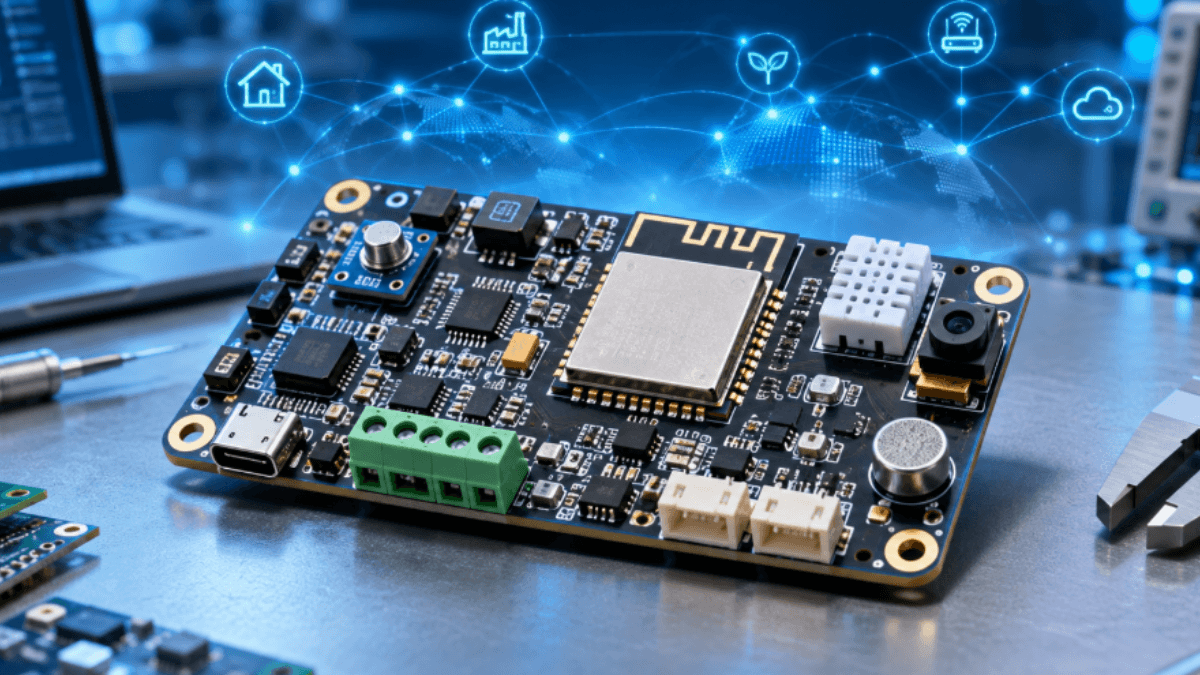


Building a connected electronic product requires more than selecting a capable microcontroller and adding wireless connectivity. The real challenge lies in developing firmware that allows hardware, sensors, communication interfaces, and software applications to work together reliably. This is where Custom ESP32 Firmware Development becomes important for businesses creating modern IoT products.
The ESP32 platform offers an attractive combination of processing capabilities, Wi-Fi, Bluetooth, and peripheral interfaces. However, turning these features into a production-ready solution requires careful firmware architecture, hardware integration, power optimization, security implementation, and extensive testing. Poorly structured firmware can create connectivity issues, unstable device behavior, and difficulties when scaling a prototype into a commercial product.
At Waferlabs, we bring embedded engineering expertise and a research-driven approach to developing firmware solutions for connected products. We work with businesses to address technical challenges and transform product requirements into practical engineering solutions. In this article, we explore the development process, important technical considerations, and how the right Custom ESP32 Firmware Development approach can help bring your IoT product idea closer to reality.
1. Understanding ESP32 Firmware Development for IoT Applications
The ESP32 is a family of microcontrollers developed by Espressif Systems. It is widely used in connected products because selected ESP32 variants combine processing capabilities with wireless connectivity and multiple peripheral interfaces.
For businesses developing IoT devices, the platform can support applications such as:
- Smart home automation and connected appliances.
- Industrial monitoring and equipment control.
- Wireless sensor networks.
- Asset tracking and telemetry devices.
- Consumer electronics and connected products.
- Remote monitoring and control systems.
However, selecting an ESP32 module is only one part of product development. The firmware determines how the device reads sensor data, processes information, manages communication, responds to commands, and handles unexpected operating conditions.
This is where Custom ESP32 Firmware Development becomes valuable. Instead of relying on generic example programs, engineers develop firmware around the product’s actual functional requirements.
At Waferlabs, we approach embedded development by understanding the complete product architecture. This helps us consider firmware behavior alongside hardware design, peripheral integration, connectivity, and future product requirements.
2. Core Technologies Used in Custom ESP32 Firmware Development
A successful ESP32 project depends on selecting the right development environment, software architecture, and communication technologies.
ESP-IDF and Arduino Framework
Two commonly used development options are ESP-IDF and the Arduino framework.
ESP-IDF (Espressif IoT Development Framework) is Espressif’s official development framework. It provides access to hardware features, networking components, debugging facilities, and FreeRTOS-based development capabilities.
The Arduino framework offers a simpler programming environment and can be suitable for prototypes and applications with relatively straightforward requirements.
The choice depends on factors such as:
- Product complexity.
- Hardware requirements.
- Performance expectations.
- Memory constraints.
- Development and maintenance needs.
For products requiring detailed control over hardware and system behavior, ESP-IDF can provide a suitable foundation for Custom ESP32 Firmware Development.
FreeRTOS and Task Management
Many ESP32 development configurations use FreeRTOS to manage multiple tasks.
For example, an industrial monitoring device may need to collect sensor readings, process measurements, communicate with a cloud platform, and monitor system health.
Task-based programming helps organize these operations. Engineers must consider task priorities, timing, synchronization, and shared resources to avoid unpredictable behavior.
Well-structured Custom ESP32 Firmware Development helps keep these operations manageable as product functionality grows.
Wireless Connectivity
Depending on the ESP32 variant, wireless capabilities can include Wi-Fi and Bluetooth technologies.
Common application requirements include:
- Connecting devices to wireless networks.
- Communicating with mobile applications.
- Sending sensor information to cloud platforms.
- Supporting device configuration.
- Managing network interruptions and reconnections.
Connectivity should be designed around the product’s operating environment rather than treated as an additional feature at the end of development.
3. Hardware Integration and Peripheral Development
Firmware must communicate correctly with the physical components connected to the ESP32. This makes hardware integration one of the most important stages of embedded product development.
A typical ESP32-based device may include sensors, displays, memory, actuators, communication modules, and power management circuits.
Sensor and Peripheral Integration
The ESP32 supports several peripheral interfaces, depending on the specific chip. These may include:
- GPIO: Digital input and output operations.
- I2C: Communication with sensors and peripheral devices.
- SPI: High-speed communication with supported external components.
- UART: Serial communication with external modules.
- ADC: Analog signal measurement on supported pins.
For example, a smart agriculture device may collect temperature, humidity, and soil moisture measurements. The firmware must read sensor values, handle communication errors, process the information, and transmit relevant data.
Effective Custom ESP32 Firmware Development ensures that these operations work together according to the product’s requirements.
Working with Custom Hardware
Hardware and firmware decisions influence each other. Pin allocation, voltage levels, peripheral availability, clock configuration, and board design can affect firmware implementation.
At Waferlabs, our hardware and embedded engineering capabilities allow us to consider these dependencies during product development. This is particularly useful when a business is developing a custom PCB rather than using a standard development board.
4. Security, Power Optimization, and Firmware Reliability

A connected product must do more than perform its primary function. It should also protect information, manage power consumption, and operate reliably under expected conditions.
Embedded Device Security
IoT devices communicate with networks, applications, and external platforms. Without suitable security measures, they may become vulnerable to unauthorized access or data exposure.
Depending on the application and ESP32 variant, security considerations may include:
- Secure boot configuration.
- Flash encryption.
- Protected device credentials.
- Encrypted network communication.
- Secure firmware update mechanisms.
- Appropriate access control.
Custom ESP32 Firmware Development should incorporate security requirements from the beginning rather than treating them as a final-stage addition.
Power Consumption Management
Battery-powered products require careful energy management.
Firmware engineers may use sleep modes, peripheral control, communication scheduling, and optimized processing cycles to reduce unnecessary power consumption.
For example, a remote environmental sensor may collect measurements periodically and transmit them at scheduled intervals rather than maintaining continuous wireless communication.
The appropriate strategy depends on response-time requirements, battery capacity, communication frequency, and operating conditions.
Reliability and Error Handling
Firmware should account for situations such as network disconnections, invalid sensor readings, unexpected inputs, and communication timeouts.
Watchdog configuration, controlled recovery mechanisms, error logging, and suitable state management can improve system resilience.
At Waferlabs, we consider these requirements when planning Custom ESP32 Firmware Development for products intended for sustained operation.
5. Testing, Debugging, and Production Readiness
A prototype that works during a demonstration is not necessarily ready for commercial deployment. Firmware must be evaluated under realistic operating conditions.
A structured validation process can include:
- Unit testing: Checking individual firmware functions and modules.
- Peripheral testing: Verifying communication with sensors and external devices.
- Connectivity testing: Evaluating network connection, reconnection, and data transfer behavior.
- System testing: Checking interactions between firmware and hardware.
- Power testing: Measuring consumption under different operating conditions.
- Long-duration testing: Identifying stability issues that may appear during extended operation.
Debugging tools, serial logs, hardware measurement equipment, and automated test procedures can help engineers identify problems.
Professional Custom ESP32 Firmware Development also considers firmware update requirements, configuration management, and maintainability.
For businesses preparing to manufacture their products, these activities help create a more dependable transition from prototype development to production.
6. How Waferlabs Delivers ESP32 Firmware Engineering Solutions
At Waferlabs, we believe successful embedded products begin with understanding the problem they are designed to solve.
Our engineering approach starts by discussing your product concept, functional requirements, hardware architecture, connectivity needs, and intended operating environment.
We then identify the appropriate development approach and work through the engineering requirements.
Our relevant capabilities include:
- Firmware development: Building embedded software around product-specific functionality.
- Hardware development: Addressing circuit-level and component integration requirements.
- PCB design: Supporting custom board development and hardware implementation.
- Embedded systems engineering: Connecting hardware, firmware, and system-level functionality.
- Product development support: Helping businesses progress from engineering concepts towards practical products.
Our team includes professionals with backgrounds at Intel, Broadcom, Qualcomm, and Microsoft. We bring a research-driven mindset to engineering challenges and focus on practical solutions that align with product objectives.
When businesses approach us for Custom ESP32 Firmware Development, our objective is to understand their requirements and develop a suitable engineering solution, not simply deliver code that works on a development board.
Whether you are creating an IoT prototype, developing a connected industrial device, or planning a commercial electronic product, Waferlabs can help you evaluate the engineering requirements and move towards implementation.
7. Why Partner with Experts for Custom ESP32 Firmware Development?
Developing an ESP32-based product requires expertise across firmware architecture, wireless communication, hardware integration, debugging, and system validation. Managing these disciplines internally can be difficult, especially when your team is focused on product strategy and business growth.
Working with experienced engineers gives your business access to relevant technical capabilities without the need to build every specialization in-house.
At Waferlabs, our multidisciplinary engineering experience helps us consider firmware alongside hardware, PCB design, and embedded system requirements. This can support better integration decisions, reduce avoidable development issues, and help teams work towards their product milestones.
Our approach to Custom ESP32 Firmware Development emphasizes technical clarity, practical engineering, and solutions designed around the customer’s application.
For startups, this means access to engineering support during product development. For established businesses, it can provide additional expertise for new products, complex integrations, or existing system improvements.
Conclusion: Turn Your ESP32 Idea into a Product That Works

The difference between an interesting IoT prototype and a dependable commercial product lies in the engineering behind it. Hardware, firmware, connectivity, security, and testing must work together.
At Waferlabs, we bring these disciplines together to help businesses move beyond prototypes and build connected products with a clear engineering foundation. Our Custom ESP32 Firmware Development expertise supports businesses looking for practical, application-focused embedded solutions.
Have an IoT product idea? Let’s engineer it into reality.
Whether you are starting with a concept or looking to improve an existing design, connect with Waferlabs. Let’s discuss your requirements, solve the technical challenges, and build the technology that moves your business forward.
Frequently Asked Questions About Custom ESP32 Firmware Development
1. What is Custom ESP32 Firmware Development?
Custom ESP32 Firmware Development involves creating embedded software specifically for an ESP32-based electronic product. It includes programming hardware peripherals, managing sensors, implementing wireless connectivity, processing data, and controlling device operations. Unlike generic example programs, custom firmware is designed around the product’s functional requirements, hardware architecture, and operating environment. It may also include security features, power optimization, debugging, and firmware update capabilities to support reliable product operation.
2. Which programming language is used for ESP32 firmware development?
C and C++ are commonly used for ESP32 firmware development. Espressif’s ESP-IDF framework primarily supports C-based development, while the Arduino framework provides a familiar C++ programming environment. The appropriate choice depends on application complexity, hardware requirements, development preferences, and long-term maintenance considerations. For projects requiring detailed control over embedded functionality, ESP-IDF is often considered. The development framework should be selected based on the product rather than convenience alone.
3. Can ESP32 be used for industrial IoT applications?
Yes. Suitable ESP32 variants can support industrial IoT applications such as equipment monitoring, sensor data collection, wireless control, and remote device communication. However, the design must account for environmental conditions, electrical requirements, network reliability, security, and system integration. Custom ESP32 Firmware Development helps implement application-specific behavior, communication protocols, and error-handling mechanisms. The final hardware and firmware must be validated against the actual industrial operating requirements.
4. How much time does ESP32 firmware development take?
Development time depends on product complexity, hardware availability, connectivity requirements, and testing expectations. A simple sensor-monitoring prototype may require considerably less effort than a commercial device involving multiple peripherals, wireless communication, security, and power optimization. Custom ESP32 Firmware Development also includes integration, debugging, and validation activities. A clear requirements document and early hardware planning can help engineering teams estimate the project scope more accurately.
5. Does ESP32 support Wi-Fi and Bluetooth connectivity?
Many ESP32 family devices support Wi-Fi and Bluetooth, although exact capabilities vary by chip and module. Some variants support Bluetooth Low Energy, while others provide additional Bluetooth capabilities. Engineers should verify the specifications of the selected device before finalizing the product architecture. Custom ESP32 Firmware Development can implement the required wireless functionality, including network configuration, device communication, connection management, and data exchange with applications or cloud platforms.
6. Can Waferlabs develop custom firmware for ESP32-based products?
Waferlabs provides embedded firmware and hardware engineering capabilities relevant to ESP32-based product development. The engineering approach considers the product’s functional requirements, hardware architecture, peripheral integration, connectivity, and system behavior. Depending on project scope, this can involve firmware development alongside PCB design and broader embedded systems engineering. Businesses can discuss their product requirements with Waferlabs to understand the engineering approach and support needed for their development goals.

