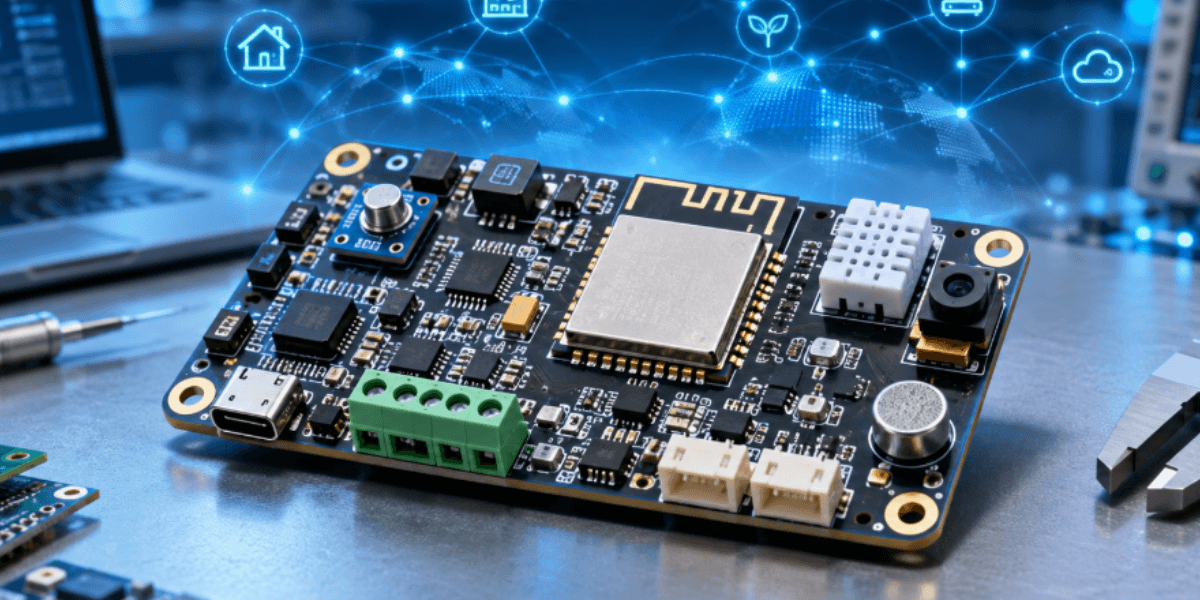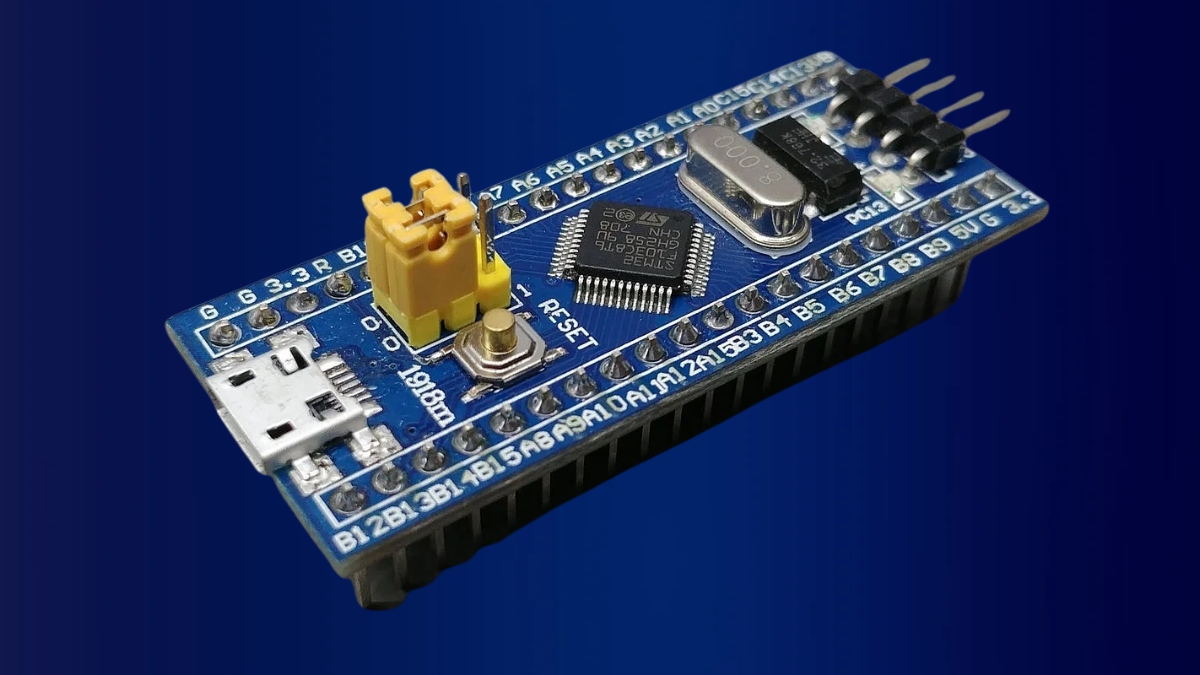


Behind every reliable embedded product is firmware that manages how its hardware operates, processes information, and responds to real-world conditions. Whether it is an industrial controller, automotive electronic system, medical device, or smart consumer product, the quality of firmware directly influences performance, stability, and functionality. This makes professional STM32 Firmware Development Services important for businesses building advanced embedded products.
STM32 microcontrollers from STMicroelectronics offer a versatile platform for developing applications that require real-time processing, precise peripheral control, communication interfaces, and efficient power management. However, using these capabilities effectively requires more than writing basic microcontroller code. Firmware architecture, hardware integration, interrupt handling, communication protocols, debugging, and system validation all demand careful engineering.
At Waferlabs, we bring embedded systems and firmware engineering expertise together to help businesses address these development challenges. Our approach focuses on building practical firmware solutions around specific product requirements. In this article, we explore the STM32 development ecosystem, essential engineering practices, common technical challenges, and how the right STM32 Firmware Development Services can help turn your embedded product concept into a dependable solution.
1. Understanding STM32 Firmware Development for Embedded Products
STM32 microcontrollers are widely used in embedded products that require dependable processing, precise hardware control, and efficient communication. Developed by STMicroelectronics, the STM32 family includes different microcontroller series designed for applications ranging from simple control systems to sophisticated embedded platforms.
Businesses developing industrial equipment, automotive electronics, medical devices, and consumer products often choose STM32 because of its extensive peripheral support and development ecosystem.
However, selecting a microcontroller does not automatically guarantee product performance. The firmware must be carefully developed to manage hardware resources, execute application logic, and respond to external events.
Professional STM32 Firmware Development Services help businesses translate product requirements into functional embedded software.
Typical development requirements include:
- Microcontroller initialization and configuration.
- Peripheral communication and control.
- Real-time task management.
- Interrupt handling and event processing.
- Power management and optimization.
- Firmware debugging and validation.
For example, an industrial monitoring system may need to collect sensor measurements, process data, communicate with another controller, and trigger alerts when operating conditions change.
At Waferlabs, we approach these requirements from an embedded systems engineering perspective. Our focus is on understanding the product’s functionality and developing firmware that supports its complete hardware architecture.
2. STM32 Development Tools and Firmware Architecture
Selecting the right development environment is an important early decision. STM32 offers an established ecosystem that helps engineers configure microcontrollers, develop firmware, and debug embedded applications.
STM32CubeIDE and STM32CubeMX
STM32CubeIDE provides an integrated development environment for writing, building, and debugging STM32 applications.
STM32CubeMX helps engineers configure peripherals, clock settings, pin assignments, and middleware before generating initialization code.
These tools support STM32 Firmware Development Services by simplifying hardware configuration and providing a structured development environment.
HAL and Low-Level Programming
STM32 development commonly uses the Hardware Abstraction Layer (HAL), which provides APIs for accessing microcontroller peripherals.
For applications requiring more direct hardware control, engineers may also use the Low-Layer (LL) drivers or register-level programming.
The choice depends on performance requirements, application complexity, maintainability, and development constraints.
At Waferlabs, we consider these factors when planning STM32 Firmware Development Services, ensuring that the firmware architecture matches the product’s actual requirements rather than relying on unnecessary complexity.
Bare-Metal and RTOS-Based Development
Some applications can operate effectively using a bare-metal architecture, while more complex products may benefit from an RTOS.
The appropriate approach depends on task complexity, timing requirements, memory availability, and system behavior.
Good STM32 Firmware Development Services establish this architecture early to support future functionality and maintainability.
3. Peripheral Integration and Hardware Communication
An embedded product becomes useful when its microcontroller can communicate reliably with external components. STM32 microcontrollers support various interfaces that allow engineers to integrate sensors, displays, memory devices, communication modules, and control circuits.
Common STM32 Peripheral Interfaces
Depending on the selected STM32 device, peripheral interfaces may include:
| Interface | Typical application |
|---|---|
| GPIO | Digital input and output control |
| UART | Serial communication |
| SPI | Displays, memory and external devices |
| I2C | Sensor and peripheral communication |
| ADC | Analog signal measurement |
| PWM | Motor and actuator control |
| CAN | Communication in automotive and industrial systems |
Reliable STM32 Firmware Development Services must account for interface configuration, communication timing, error handling, and hardware-specific requirements.
Sensor and Actuator Integration
Consider an industrial automation controller that monitors temperature, pressure, and vibration. The firmware must collect measurements, process the readings, and communicate relevant information to other system components.
Similarly, motor-control applications require accurate timing, PWM configuration, feedback processing, and suitable protection mechanisms.
At Waferlabs, we consider these hardware dependencies while developing embedded solutions. Our hardware and PCB engineering capabilities also help address integration requirements when firmware is being developed alongside custom electronic boards.
This integrated approach makes STM32 Firmware Development Services particularly valuable for businesses building specialized electronic products.
4. Real-Time Processing and FreeRTOS Development

Many embedded applications must respond to events within defined time constraints. A delay in processing a sensor input or controlling an actuator may affect the overall system behavior.
This makes real-time firmware architecture an important consideration.
Interrupt Handling
Interrupts allow the microcontroller to respond to specific hardware or software events without continuously checking every peripheral.
Common examples include:
- Timer events.
- External GPIO signals.
- UART communication events.
- ADC conversion completion.
- Peripheral data reception.
Engineers must design interrupt routines carefully to avoid unnecessary processing delays and resource conflicts.
FreeRTOS Task Management
FreeRTOS can help organize applications that need multiple concurrent activities.
For example, an embedded controller might perform sensor acquisition, communication, data processing, and system monitoring as separate tasks.
Engineers must consider task priorities, synchronization, shared memory, and timing requirements.
Experienced STM32 Firmware Development Services help businesses implement suitable real-time architectures without introducing unnecessary overhead.
At Waferlabs, we consider the complete application workflow before selecting the firmware architecture. This helps ensure that the resulting implementation supports the product’s performance and operational requirements.
5. Firmware Optimization, Security, and Reliability
Developing firmware that works during initial testing is only the beginning. Commercial embedded products must also operate reliably within their intended environments.
Performance and Memory Optimization
STM32 microcontrollers have specific processor, memory, and peripheral capabilities. Firmware must use these resources efficiently.
Optimization may involve:
- Reducing unnecessary processing operations.
- Managing RAM and Flash usage.
- Improving interrupt efficiency.
- Optimizing communication routines.
- Selecting suitable data structures.
- Reviewing CPU and peripheral utilization.
Effective STM32 Firmware Development Services consider these constraints throughout implementation.
Embedded Security
Connected embedded products may exchange information with external devices, networks, or industrial systems.
Security requirements can include secure firmware updates, authentication, protected communication, access restrictions, and secure boot where supported by the selected device.
Fault Handling and Recovery
Firmware should also account for unexpected conditions such as communication failures, invalid sensor readings, peripheral errors, and system interruptions.
Watchdog timers, error detection, diagnostic logging, and controlled recovery mechanisms can improve system resilience.
At Waferlabs, we treat these considerations as important parts of STM32 Firmware Development Services, particularly when developing products intended for continuous operation.
6. STM32 Firmware Testing, Debugging, and Validation
A well-designed firmware architecture still requires thorough testing. Debugging and validation help confirm that the software interacts correctly with the microcontroller and connected hardware.
A structured testing process may include:
- Unit testing: Checking individual functions and software modules.
- Peripheral testing: Verifying UART, SPI, I2C, ADC, and other interfaces.
- Integration testing: Evaluating firmware interactions with the complete hardware system.
- Timing analysis: Checking interrupt response and real-time task behavior.
- Memory testing: Identifying memory-related problems.
- Long-duration testing: Evaluating stability during extended operation.
Engineers may use debugging interfaces, serial logs, oscilloscopes, logic analyzers, and suitable testing tools to investigate issues.
Professional STM32 Firmware Development Services should include validation against actual product requirements rather than stopping when the firmware successfully compiles.
For businesses preparing to manufacture their products, this engineering discipline supports a smoother transition from prototype to production.
7. How Waferlabs Approaches STM32 Firmware Engineering
At Waferlabs, we understand that embedded firmware is not an isolated software component. It is part of a larger electronic product that must operate as a coordinated system.
Our development approach begins by understanding your product concept, hardware architecture, functionality, performance expectations, and operating environment.
Based on these requirements, we identify the appropriate firmware architecture and engineering approach.
Our relevant capabilities include:
- Firmware development: Building application-specific embedded software.
- Hardware development: Addressing circuit-level and component integration requirements.
- PCB design: Supporting custom electronic board development.
- Embedded systems engineering: Connecting firmware and hardware functionality.
- FPGA development: Supporting products that require programmable logic.
Our engineering team includes professionals with backgrounds at Intel, Broadcom, Qualcomm, and Microsoft. We bring a research-driven approach to solving complex engineering problems.
When businesses approach us for STM32 Firmware Development Services, we focus on delivering solutions that address actual product requirements, not simply writing code for a microcontroller.
Whether you are developing an industrial controller, a connected electronic device, or a specialized embedded product, Waferlabs can support your engineering journey.
8. Why Partner with Experts for STM32 Firmware Development Services?

Developing production-ready embedded firmware requires experience across microcontroller architecture, peripheral integration, real-time processing, debugging, and hardware validation.
Building all these capabilities internally can take considerable time and resources, particularly for startups and businesses entering a new product category.
Working with experienced engineers gives your team access to specialized knowledge while allowing you to concentrate on product strategy and business priorities.
At Waferlabs, our multidisciplinary engineering capabilities help us consider firmware alongside hardware design, PCB development, and embedded system integration.
Our approach to STM32 Firmware Development Services focuses on reducing avoidable engineering challenges, supporting efficient development, and building maintainable solutions.
For businesses developing new products or improving existing systems, the right engineering partner can bring clarity to technical decisions and help move development forward with confidence.
Conclusion: Build Your Next Embedded Product with Engineering Confidence
A powerful microcontroller is only as effective as the engineering behind it. The right firmware architecture, precise peripheral integration, real-time processing, and thorough validation determine how successfully an embedded product performs.
At Waferlabs, we combine embedded systems knowledge with practical hardware and firmware engineering to help businesses turn complex requirements into working products.
Our STM32 Firmware Development Services are designed around your product goals, technical challenges, and development priorities.
Your next product deserves more than code. It deserves engineering that works.
Have an STM32-based product in mind? Let’s discuss your requirements, explore the right technical approach, and build a reliable foundation for your next innovation. Connect with Waferlabs and take your embedded product from concept to reality.
Frequently Asked Questions About STM32 Firmware Development Services
1. What are STM32 Firmware Development Services?
STM32 Firmware Development Services involve creating embedded software for products using STM32 microcontrollers. The work can include microcontroller configuration, peripheral programming, communication protocols, real-time processing, and hardware integration. Depending on the application, engineers may also implement FreeRTOS, power optimization, security features, and debugging procedures. These services help businesses develop firmware that supports their specific product functionality, hardware architecture, and operating requirements.
2. Which programming language is used for STM32 firmware development?
C is widely used for STM32 firmware development because it provides efficient access to microcontroller hardware and embedded resources. C++ may also be used depending on the application architecture. Development commonly involves STM32CubeIDE, STM32CubeMX, HAL libraries, and LL drivers. The appropriate combination depends on performance requirements, maintainability, hardware complexity, and the development team’s approach.
3. Can STM32 microcontrollers be used for industrial applications?
Yes. STM32 microcontrollers are used in various industrial applications, including equipment monitoring, automation controllers, motor-control systems, and communication devices. The selected microcontroller must meet the application’s processing, peripheral, memory, and environmental requirements. Professional STM32 Firmware Development Services help implement the necessary control logic, communication interfaces, real-time processing, and fault-handling mechanisms for the intended application.
4. What is the difference between bare-metal programming and FreeRTOS in STM32?
Bare-metal programming executes application logic without an operating system, often using a main loop and interrupts. FreeRTOS provides task scheduling and synchronization mechanisms for applications involving multiple concurrent activities. Bare-metal development can suit simpler systems, while FreeRTOS may be appropriate for more complex applications with multiple timing and processing requirements. The correct choice depends on system architecture, resource availability, and application complexity.
5. Can Waferlabs develop custom firmware for STM32-based products?
Yes. Waferlabs provides embedded firmware and hardware engineering capabilities relevant to STM32-based product development. Depending on project requirements, engineering work can involve microcontroller programming, peripheral integration, real-time processing, hardware interaction, and firmware validation. Our broader capabilities in PCB design and embedded systems engineering also support projects requiring coordination between hardware and software. Businesses can connect with Waferlabs to discuss their product requirements and development objectives.
Partner with Waferlabs for expert STM32 Firmware Development Services and transform your embedded product vision into a reliable, production-ready solution.