

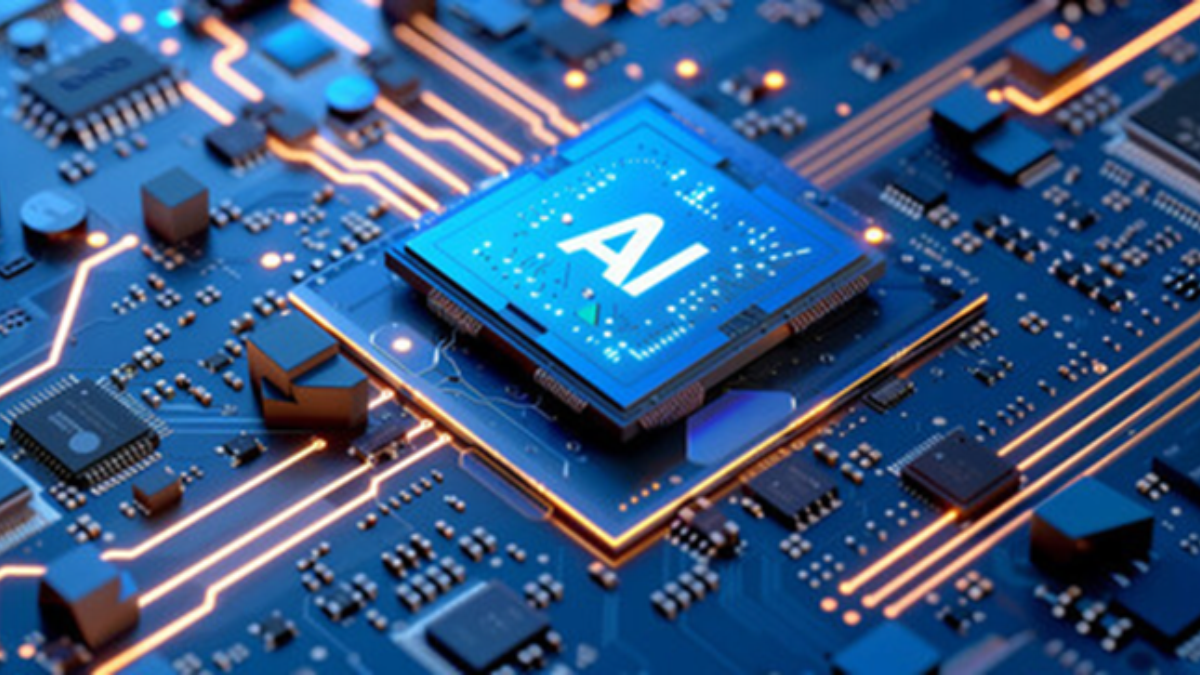


Artificial intelligence is moving beyond cloud platforms and becoming part of the electronic devices people use every day. Smart cameras can identify objects locally, industrial sensors can detect unusual operating patterns, and connected equipment can make decisions without continuously depending on remote servers. These capabilities are powered by edge AI, where data processing and inference take place closer to the device. Firmware Development for Edge AI Devices plays an important role in making these systems work by coordinating processors, sensors, memory, and AI acceleration hardware.
However, deploying AI on resource-constrained hardware introduces engineering challenges. Developers must consider processing capacity, memory limitations, power consumption, real-time response, and hardware compatibility. Firmware must also manage communication between the AI model and the device’s electronic components.
For product developers and technology businesses, Firmware Development for Edge AI Devices requires a combination of embedded engineering knowledge and a clear understanding of AI hardware requirements. This article explores the architecture, technical considerations, development challenges, and engineering approaches involved in building reliable edge AI products.
1. Understanding the Role of Firmware in Edge AI Devices
Edge AI devices process information locally instead of depending entirely on remote cloud servers. This allows applications to analyse sensor data, identify patterns, and respond to events closer to where the information is generated.
Examples include smart cameras that identify objects, industrial sensors that detect abnormal equipment behaviour, and connected devices that recognise voice commands.
Firmware Development for Edge AI Devices provides the embedded control layer that connects the AI processing hardware with the rest of the electronic system. It manages hardware resources, coordinates peripherals, and enables communication between the application software and physical components.
How firmware supports edge AI operations
Firmware performs several important functions:
- Hardware initialization: Configures processors, memory, sensors, and peripheral interfaces.
- Data acquisition: Collects information from cameras, microphones, and other sensors.
- AI processing coordination: Makes available input data to the inference engine and manages its execution requirements.
- Communication management: Handles information exchange between the device and external systems.
- Power management: Controls processor activity and peripheral power states.
- Diagnostics: Monitors device conditions and handles hardware-related errors.
For example, an industrial monitoring device may collect vibration measurements from machinery. The embedded system processes these measurements and makes them available to an AI model that identifies unusual operating patterns.
In this application, Firmware Development for Edge AI Devices must coordinate sensor acquisition, data movement, processor resources, and the AI inference workflow.
The firmware architecture also needs to consider how the device behaves when processing resources become limited or communication is interrupted. A carefully structured approach helps ensure that Firmware Development for Edge AI Devices supports consistent operation under the intended conditions.
2. Hardware Architecture and Processing Requirements
The hardware platform determines how much computing capacity an edge AI device can provide. Unlike cloud environments, embedded devices generally operate with limited memory, processing resources, and power budgets.
Therefore, hardware selection is a major consideration in Firmware Development for Edge AI Devices.
Selecting the right processing platform
Different edge AI applications require different processing capabilities.
Microcontrollers (MCUs)
Microcontrollers are suitable for applications involving relatively lightweight inference, sensor processing, and control functions. They are often selected when cost and power efficiency are important.
Microprocessors (MPUs)
Microprocessors can support more demanding workloads, operating systems, and complex application environments. They may be suitable for intelligent gateways, advanced cameras, and industrial edge systems.
Neural Processing Units (NPUs)
NPUs are specialised processors designed to accelerate machine learning operations. They can improve inference performance for supported AI workloads.
Graphics Processing Units (GPUs)
GPUs can handle parallel processing workloads and may be useful in edge systems that require greater computational capacity.
The choice depends on model complexity, inference requirements, memory availability, power consumption, and product cost.
Memory and data movement
AI workloads can require significant memory bandwidth and storage capacity. Firmware must manage how sensor information, model parameters, intermediate results, and application data move through the system.
For example, an edge vision device may need to capture image frames, prepare them for inference, and transfer the results to another application module.
Firmware Development for Edge AI Devices should consider these data paths during architecture planning. Poor memory management can create processing delays or reduce system responsiveness.
Engineers should also evaluate RAM, flash storage, external memory interfaces, and available acceleration resources.
The relationship between hardware architecture and firmware design is particularly important when Firmware Development for Edge AI Devices targets compact products with strict power and performance limitations.
3. AI Model Integration and Embedded Software Optimisation
Running an AI model on an embedded device involves more than transferring a trained model into memory. The model must be compatible with the target hardware and inference environment.
This is an important area of Firmware Development for Edge AI Devices.
Model deployment on embedded hardware
An AI model is usually trained using a development environment and then prepared for deployment on the target platform.
The deployment process may involve:
- Selecting a suitable inference framework.
- Converting the trained model into a supported format.
- Applying quantisation or other optimisation techniques where appropriate.
- Checking compatibility with the target processor or accelerator.
- Integrating the inference runtime with the embedded application.
- Validating the model’s performance on actual hardware.
For example, a smart camera may use a compact object-detection model to identify vehicles or equipment. The firmware must coordinate image acquisition, preprocessing, inference execution, and result handling.
Optimising memory and processing performance
Embedded AI systems often operate within strict resource limits.
Common optimisation approaches include:
- Quantisation: Reducing numerical precision to lower memory requirements and improve supported hardware execution.
- Model compression: Reducing model size where accuracy and performance remain acceptable.
- Memory optimisation: Managing buffers and memory allocation carefully.
- Hardware acceleration: Using supported processing units for suitable AI operations.
- Efficient scheduling: Coordinating inference tasks with other device operations.
The right optimisation depends on the model, hardware, and application requirements.
Firmware Development for Edge AI Devices must ensure that these optimisations do not compromise essential device functions. A model that performs well during development may behave differently when integrated into the complete embedded system.
This makes hardware-level validation an important part of Firmware Development for Edge AI Devices.
4. Real-Time Processing, Connectivity, and Data Management

Many edge AI applications must respond to events within a defined period. A system monitoring industrial machinery, for example, may need to identify abnormal conditions and provide information to a control application.
In such cases, Firmware Development for Edge AI Devices must account for timing, processing priorities, and communication requirements.
Managing real-time operations
An edge AI device may execute several operations simultaneously:
- Collecting sensor measurements.
- Processing input data.
- Running AI inference.
- Managing communication.
- Monitoring hardware conditions.
- Recording diagnostics.
Engineers must determine how these tasks are scheduled and prioritised.
A real-time operating system may be appropriate when the application requires structured task management, predictable scheduling, and coordination between multiple functions. Simpler devices may use a bare-metal architecture.
The choice depends on system complexity and timing requirements.
Connectivity and communication
Edge AI devices may communicate using technologies such as:
- Ethernet.
- Wi-Fi.
- Bluetooth Low Energy.
- Cellular connectivity.
- CAN and other industrial interfaces.
- UART, SPI, and I2C for peripheral communication.
Connectivity requirements vary according to the application. An industrial edge controller may exchange information with existing equipment, while a smart camera may transmit detection results to a monitoring platform.
Firmware Development for Edge AI Devices should include suitable communication handling, error detection, and recovery mechanisms.
Local processing and cloud integration
Local inference reduces the need to transmit every raw data sample to a remote server. However, some applications still require cloud connectivity for model updates, remote monitoring, data analysis, or device management.
A balanced architecture defines which operations take place locally and which depend on external services.
This is an important architectural decision in Firmware Development for Edge AI Devices, especially when network availability and response time influence product behaviour.
5. Security, Reliability, and Device Lifecycle Management
Edge AI devices may process sensitive information, operate in industrial environments, or remain deployed for extended periods. Their firmware must support appropriate security and reliability requirements.
Protecting device access
Security considerations may include:
- Secure boot.
- Authenticated communication.
- Protected credentials.
- Controlled debugging interfaces.
- Firmware integrity verification.
- Appropriate access permissions.
For example, an edge AI camera used in a commercial facility may process sensitive visual information. Its architecture should consider how data is accessed, transmitted, and stored.
Secure model and firmware updates
AI models and embedded firmware may require updates after deployment.
A secure update process should consider package authentication, integrity checks, installation recovery, and compatibility with the target hardware.
Firmware Development for Edge AI Devices should account for model version management as well as conventional firmware updates. A new model may have different memory or processing requirements from the previous version.
Reliability and fault handling
Edge devices may operate in environments where temperature changes, electrical interference, network interruptions, and hardware limitations affect performance.
Engineering teams should evaluate:
- Watchdog mechanisms.
- Error detection.
- Memory protection where supported.
- Recovery behaviour.
- Hardware fault monitoring.
- Diagnostic logging.
Reliable Firmware Development for Edge AI Devices requires testing both normal operations and unexpected conditions.
The device should also have clearly defined behaviour when an inference operation fails, sensor data becomes unavailable, or an external connection is lost.
6. Common Engineering Challenges in Edge AI Product Development
Edge AI combines embedded electronics with machine learning workloads. This creates engineering challenges that require coordination between hardware, firmware, and AI development teams.
Balancing performance and power consumption
Higher processing performance may increase energy consumption and thermal output. However, low-power hardware may not support the required AI workload.
Engineers must evaluate the relationship between inference speed, model complexity, processor utilisation, and energy requirements.
Firmware Development for Edge AI Devices should account for the complete power profile rather than focusing only on processor specifications.
Hardware and software compatibility
An AI model, inference framework, processor, memory architecture, and peripheral interfaces must work together.
A model that runs successfully on a development computer may require optimisation before it can operate on the final embedded platform.
This is why Firmware Development for Edge AI Devices should involve early hardware validation and integration testing.
Managing thermal conditions
AI workloads can place sustained demands on embedded processors and accelerators. In compact products, this may create thermal challenges.
The engineering team should consider heat dissipation, operating temperature limits, enclosure design, and workload management.
Maintaining model performance
Model performance can change when input conditions differ from the training environment.
For example, a vision system may encounter different lighting conditions, camera positions, or object appearances after deployment.
Firmware Development for Edge AI Devices should support suitable diagnostics and monitoring so that product teams can evaluate system behaviour.
Firmware architecture should also allow model replacement or updates when supported by the product design.
7. Why Partner with Experienced Engineering Professionals?

Developing an edge AI product requires expertise across embedded systems, hardware architecture, firmware engineering, and electronic integration. Businesses may not have every required specialisation available within their internal teams.
Working with experienced engineers can help manage technical dependencies and identify potential integration challenges early.
For companies investing in Firmware Development for Edge AI Devices, an engineering partner should understand the relationship between processing hardware, memory architecture, peripheral interfaces, and embedded software.
Waferlabs provides relevant capabilities across embedded systems engineering, hardware development, PCB design, firmware development, FPGA development, and related product engineering services.
Its team includes engineering professionals with backgrounds at Intel, Broadcom, Qualcomm, and Microsoft. A research-driven approach supports the evaluation of technical options and product-specific engineering requirements.
The right engineering collaboration can help businesses:
- Select suitable hardware platforms.
- Coordinate hardware and firmware requirements.
- Address integration challenges.
- Evaluate performance and resource constraints.
- Improve product reliability.
- Prepare engineering designs for product development and manufacturing support.
Whether developing an intelligent industrial sensor, smart camera, or connected embedded product, multidisciplinary engineering expertise can help businesses move from concept towards a practical solution.
Conclusion
Edge AI is creating opportunities for intelligent products that can process information locally and respond to changing conditions. However, successful deployment depends on more than selecting an AI model or processor.
Firmware Development for Edge AI Devices connects the hardware, inference environment, sensors, communication interfaces, and application logic. Businesses must consider memory constraints, processing performance, power efficiency, security, and real-world validation during product development.
A structured engineering approach helps identify technical dependencies and establish a suitable architecture.
For businesses developing embedded AI products, working with experienced engineering professionals can support better technical decisions and a clearer path towards manufacturing. Explore how Waferlabs can support your embedded engineering requirements.
FAQ’s About Firmware Development for Edge AI Devices
1. What is firmware in an edge AI device?
Firmware is the embedded software responsible for controlling the hardware components of an edge AI device. It manages processors, sensors, memory, communication interfaces, and other peripherals. It can also coordinate the execution of an AI inference engine. Firmware Development for Edge AI Devices focuses on creating this embedded control layer so that the hardware and AI application can operate together according to the product’s requirements.
2. Which processors are used in edge AI devices?
Edge AI devices may use microcontrollers, microprocessors, GPUs, DSPs, or specialised neural processing units. The appropriate platform depends on the complexity of the AI model, memory requirements, inference performance, power consumption, and product cost. Some applications can run lightweight models on microcontrollers, while more demanding vision and analytics workloads may require dedicated acceleration hardware. Hardware selection should be completed alongside the firmware and AI deployment architecture.
3. How is an AI model deployed on an embedded device?
AI model deployment generally involves converting a trained model into a format supported by the target inference framework and hardware platform. Engineers may apply quantisation, compression, or other optimisation techniques before integrating the model with the embedded application. Firmware Development for Edge AI Devices then coordinates input acquisition, preprocessing, inference execution, and result handling. Testing on the actual target hardware is important because performance can differ from desktop development environments.
4. What are the main challenges in edge AI firmware development?
Common challenges include limited memory, processing constraints, power consumption, thermal management, hardware compatibility, and real-time response requirements. Security and firmware update management also become important when devices operate in connected environments. Firmware Development for Edge AI Devices must balance these technical requirements while ensuring that the device performs its intended functions consistently. Early hardware evaluation and integration testing help identify potential problems before the product moves towards manufacturing.
5. Can edge AI devices operate without an internet connection?
Yes. One of the main advantages of edge AI is that supported inference operations can run locally on the device without continuously depending on cloud connectivity. A smart camera, for example, can identify objects using a locally deployed model. However, certain features such as remote monitoring, cloud analytics, and model distribution may still require network access. The architecture should clearly define which functions operate locally and which depend on external services.
6. How important is power management in edge AI devices?
Power management is important because embedded AI hardware may have limited energy resources, particularly in battery-operated products. Engineers need to consider processor activity, sensor operation, memory access, and inference scheduling. Suitable hardware selection and software optimisation can help balance performance with energy consumption. The power-management strategy should reflect the application’s operating conditions and expected workload rather than relying only on processor specifications.
7. How can Waferlabs support edge AI product development?
Waferlabs offers engineering capabilities relevant to embedded product development, including hardware development, PCB design, firmware development, FPGA development, and embedded systems engineering. These disciplines can help businesses address processor integration, hardware interfaces, resource limitations, and product architecture requirements. Its research-driven approach and multidisciplinary engineering experience support businesses working to transform embedded technology concepts into practical electronic products.

