

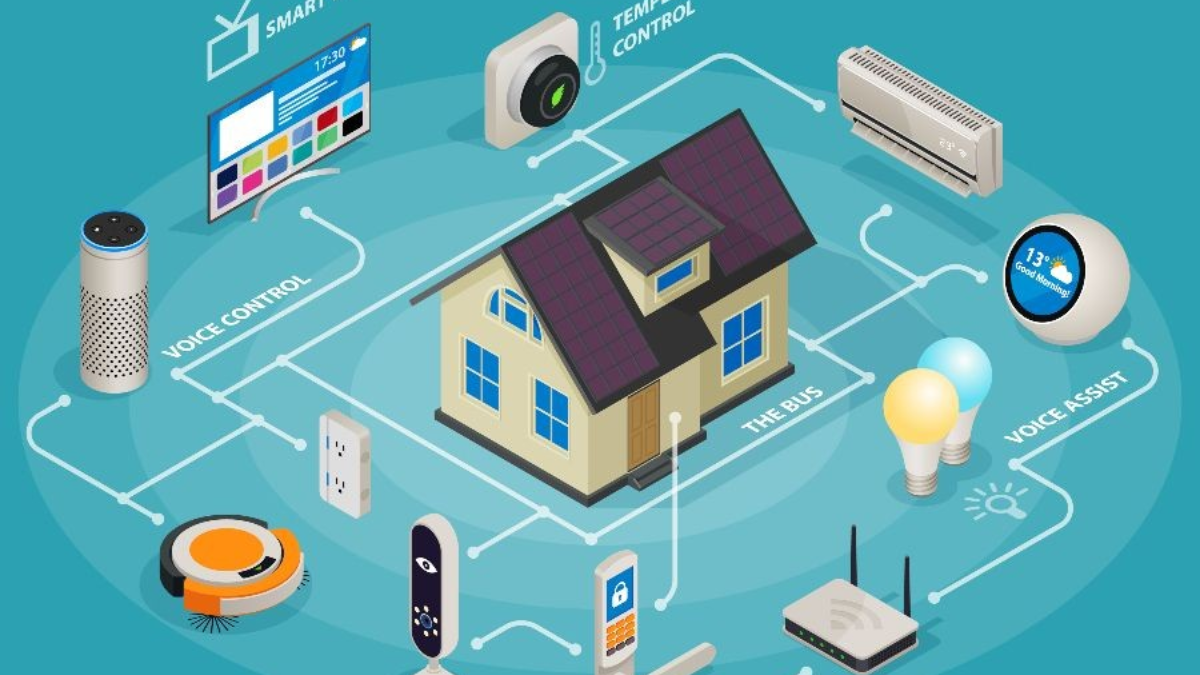


Smart appliances are changing how people interact with everyday household equipment. Refrigerators can monitor temperature conditions, washing machines can adjust operating cycles, and air conditioners can respond to environmental changes. These capabilities depend on embedded electronics and reliable firmware working together. Firmware Development for Smart Appliances plays a central role in enabling these intelligent functions by connecting hardware components, processing sensor information, and managing appliance operations.
However, building an intelligent appliance involves more than integrating a microcontroller and a display. Product developers must consider hardware compatibility, motor control, sensor accuracy, power efficiency, communication protocols, and operational safety. Firmware must also support consistent performance under different operating conditions.
For manufacturers, startups, and technology businesses, selecting the right embedded engineering approach can influence product quality, development time, and long-term maintainability. Firmware Development for Smart Appliances requires coordination between hardware and firmware engineering to transform product concepts into dependable electronic solutions.
This article explores the essential components, engineering challenges, architecture considerations, and development approaches involved in creating intelligent appliances.
Key Components of Smart Appliance Firmware Architecture
A smart appliance combines several electronic components that must operate together. The firmware architecture determines how these components communicate, process information, and execute different functions. A well-planned architecture is essential for reliable Firmware Development for Smart Appliances.
Microcontrollers and processing capabilities
The microcontroller acts as the processing centre of an appliance. It executes firmware instructions and manages connected hardware components.
Engineers should consider:
- Processing speed and performance requirements.
- Available RAM and flash memory.
- Peripheral interfaces such as UART, SPI, and I2C.
- Power consumption and operating voltage.
- Connectivity requirements.
- Support for future product enhancements.
For example, a smart microwave may need to manage heating operations, display controls, temperature sensors, and safety-related inputs. Its processor must support these functions without unnecessary resource limitations.
Selecting the right processor is an important decision in Firmware Development for Smart Appliances because hardware capabilities directly influence firmware architecture.
Sensors and actuator integration
Sensors collect information, while actuators perform physical operations.
A smart washing machine may use water-level sensors, temperature sensors, door-position sensors, and motor-control circuits. Firmware processes these inputs and coordinates the appliance’s operations.
Similarly, an intelligent refrigerator may monitor temperature conditions and control cooling-related components.
Successful Firmware Development for Smart Appliances requires accurate sensor processing, appropriate actuator control, and reliable communication between hardware components.
Modular firmware architecture
A modular architecture separates firmware functions into manageable components.
Typical modules include:
- Hardware abstraction and peripheral management.
- Sensor data acquisition.
- Motor and actuator control.
- User-interface management.
- Communication management.
- Power management.
- Diagnostics and error handling.
This approach makes Firmware Development for Smart Appliances easier to maintain and test. It also allows engineers to modify individual modules without unnecessarily affecting other appliance functions.
For manufacturers developing several appliance models, reusable firmware modules can support product variations and simplify future engineering work.
Connectivity and Communication in Smart Appliances
Modern appliances increasingly communicate with mobile applications, home networks, cloud platforms, and other connected devices.
Connectivity is therefore an important consideration in Firmware Development for Smart Appliances.
Common communication technologies
Wi-Fi: Useful for appliances requiring direct network connectivity. Smart refrigerators, air conditioners, and connected washing machines may use Wi-Fi to communicate with mobile applications or cloud platforms.
Bluetooth Low Energy: Suitable for short-range communication, device configuration, and applications where lower power consumption is important.
Zigbee: Supports low-power communication and mesh networking, making it relevant to certain connected home ecosystems.
Thread: Provides low-power mesh networking for compatible smart home products.
Matter: An application-layer standard designed to improve interoperability between compatible smart home devices and ecosystems.
The appropriate technology depends on the appliance’s communication requirements, power constraints, network environment, and intended user experience.
Managing connectivity interruptions
Wireless networks are not always reliable. Devices may experience temporary disconnections, signal interference, or router changes.
Consider a connected air conditioner. If its internet connection becomes unavailable, essential local control functions should continue operating according to the product architecture.
Firmware Development for Smart Appliances should account for:
- Connection monitoring.
- Reconnection mechanisms.
- Communication timeouts.
- Message validation.
- Device-status reporting.
- Local operation during network interruptions.
These capabilities help maintain a consistent user experience.
Another important consideration is compatibility between the appliance, mobile application, and connected platform. Engineers should define communication formats and device configuration methods early in the design process.
A carefully planned Firmware Development for Smart Appliances architecture can reduce communication-related integration problems and support future connectivity improvements.
Safety, Security, and Reliability Considerations
Smart appliances interact with electrical systems, motors, heating elements, water supplies, and other physical components. Consequently, safety and reliability must be considered throughout product engineering.
Firmware Development for Smart Appliances should include appropriate control mechanisms for normal operation and unexpected conditions.
Appliance safety mechanisms
Consider an intelligent washing machine. It may need to monitor door-lock status, water levels, motor operation, and temperature conditions.
If an unexpected condition occurs, the firmware should respond according to the appliance’s safety requirements.
Depending on the product, important considerations include:
- Temperature monitoring.
- Overcurrent and overload detection.
- Motor protection.
- Door and lid interlocks.
- Sensor fault detection.
- Appropriate error reporting.
The firmware response must be coordinated with the electrical and hardware protection mechanisms. Software alone should not be treated as a substitute for required physical safety measures.
Security of connected appliances
Connected appliances may process personal information, network credentials, and operational data.
Security considerations can include:
- Authenticated device communication.
- Encrypted data transmission.
- Secure credential storage.
- Controlled debugging access.
- Protected firmware updates.
- Appropriate user permissions.
For example, a connected appliance should not accept unauthorised commands simply because an external device can access the same network.
Firmware Development for Smart Appliances should incorporate security requirements during architecture planning rather than treating them as an additional feature.
Secure firmware updates
Manufacturers may need to update appliances after they reach customers.
Updates can introduce improvements, address vulnerabilities, and maintain compatibility with connected platforms.
A suitable update architecture should consider package authentication, firmware integrity verification, safe installation, and recovery from interrupted updates.
These requirements are important in Firmware Development for Smart Appliances, particularly for products expected to remain in use for several years.
Major Engineering Challenges in Smart Appliance Development

Developing an intelligent appliance involves several technical decisions. Even when individual components work correctly, problems can arise when they are integrated into a complete product.
This makes Firmware Development for Smart Appliances a multidisciplinary engineering activity.
Power management
Battery-operated controls, remote sensors, and connected accessories require efficient power management.
Engineers may use low-power operating modes, event-driven processing, and optimised communication intervals.
For mains-powered appliances, power management may focus more on efficient operation of the embedded controller and peripheral components.
The approach used in Firmware Development for Smart Appliances should reflect the appliance’s power architecture and operating requirements.
Hardware and firmware compatibility
Firmware must work correctly with the selected microcontroller, sensors, motor drivers, communication modules, and PCB design.
A hardware component change can affect signal handling, timing, peripheral configuration, and power requirements.
For example, replacing a temperature sensor may require changes to the firmware’s data acquisition and processing logic.
Close collaboration between hardware and firmware engineers helps manage these dependencies during Firmware Development for Smart Appliances.
Real-time control requirements
Certain appliances require timely responses to sensor inputs and user commands.
A microwave, for example, needs coordinated control of heating operations, door status, and user settings. A washing machine must coordinate motor movement, water management, and cycle timing.
Engineers should consider task scheduling, interrupt handling, timing requirements, and error conditions when planning Firmware Development for Smart Appliances.
Long-term maintenance
Appliances may remain in service for many years. Manufacturers therefore need to consider maintenance, diagnostics, firmware updates, and future product compatibility.
A modular architecture can make Firmware Development for Smart Appliances more manageable by allowing individual features to be maintained without redesigning the complete system.
Engineering Process for Developing Smart Appliance Firmware
A structured development process helps businesses move from an initial product idea towards a functional and reliable appliance.
For Firmware Development for Smart Appliances, hardware decisions and firmware requirements should be evaluated together.
Step 1: Define product requirements
Identify the appliance’s functions, user interactions, operating conditions, safety requirements, and connectivity expectations.
For example, a smart refrigerator may require temperature monitoring, cooling control, display management, and mobile connectivity.
Clear requirements establish the foundation for Firmware Development for Smart Appliances.
Step 2: Select suitable hardware
Choose the microcontroller, sensors, memory, communication modules, and electronic components according to the product requirements.
Hardware selection should consider performance, availability, power consumption, and future expansion.
Step 3: Establish the firmware architecture
Define the software modules, hardware interfaces, communication methods, and control logic.
A suitable architecture should also account for diagnostics, error handling, security, and maintenance.
Step 4: Develop and integrate firmware
Implement the required firmware functions and integrate them with the selected hardware.
This stage may involve sensor interfaces, motor-control functions, communication modules, and user-interface operations.
Firmware Development for Smart Appliances requires regular coordination between engineering teams to identify integration issues early.
Step 5: Test and validate the appliance
Testing should evaluate the complete appliance under expected operating conditions.
Depending on the product, this may include:
- Sensor accuracy testing.
- Communication and connectivity testing.
- Motor-control validation.
- Power-consumption measurement.
- Fault-handling verification.
- Security and update testing.
- Environmental testing.
A structured validation process helps identify potential issues before manufacturing.
Why Partner with Experienced Engineering Professionals?
Developing intelligent appliances requires expertise across embedded systems, hardware engineering, PCB design, firmware architecture, and product integration. Businesses may not have all these capabilities available internally.
Partnering with experienced engineers can help manage technical dependencies and reduce avoidable design changes.
For companies investing in Firmware Development for Smart Appliances, an engineering partner should understand how microcontrollers, sensors, communication interfaces, and electronic circuits work together.
Waferlabs provides relevant capabilities across embedded systems engineering, hardware development, PCB design, firmware development, and product engineering. Its engineering team includes professionals with backgrounds at Intel, Broadcom, Qualcomm, and Microsoft.
A research-driven approach can help businesses evaluate technical options, develop suitable architectures, and address product-specific engineering challenges.
The benefits of appropriate engineering collaboration include:
- Better hardware and firmware coordination.
- More informed component selection.
- Reduced integration risks.
- Improved product reliability.
- Access to multidisciplinary expertise.
- Support for product development and manufacturing requirements.
Whether a business is developing a new connected appliance or improving an existing product, the right engineering expertise can help turn technical concepts into practical solutions.
Conclusion

Intelligent appliances depend on embedded systems that coordinate electronic components, process sensor information, and respond to user requirements. Their performance is influenced by firmware architecture, hardware compatibility, connectivity, security, and testing.
Firmware Development for Smart Appliances should therefore be considered an important part of the complete product engineering process. Manufacturers should define requirements early, select suitable hardware, plan for reliable communication, and validate the complete appliance under realistic conditions.
Working with experienced engineering professionals can help businesses manage these challenges and make informed technical decisions.
With the right engineering foundation, businesses can transform appliance concepts into reliable, intelligent products. Explore how Waferlabs can support your embedded engineering and product development requirements.
Frequently Asked Questions
1. What is firmware in smart appliances?
Firmware is the embedded software that controls the electronic components inside an appliance. It allows microcontrollers to process sensor information, operate motors, manage displays, and execute programmed functions. For example, a smart washing machine uses firmware to coordinate water levels, motor operation, temperature settings, and washing cycles. Firmware Development for Smart Appliances focuses on creating this control layer so that electronic components work together according to the appliance’s functional requirements.
2. Which programming languages are used for smart appliance firmware?
C and C++ are widely used in embedded firmware engineering because they provide control over hardware resources, memory, and processor operations. Other programming languages may be suitable depending on the microcontroller, operating environment, and development framework. The choice depends on processing requirements, available libraries, memory constraints, and maintenance expectations. During Firmware Development for Smart Appliances, engineers should select a programming approach that supports the appliance’s performance and long-term product requirements.
3. Can smart appliances receive firmware updates?
Yes. Connected appliances can support firmware updates after manufacturing, depending on their hardware and software architecture. Updates may introduce functional improvements, address security vulnerabilities, and maintain compatibility with connected platforms. The update mechanism should include appropriate authentication, integrity verification, and recovery handling. Firmware Development for Smart Appliances should consider update requirements during the architecture stage so manufacturers can maintain and improve products throughout their expected service life.
4. How does firmware improve smart appliance performance?
Firmware coordinates sensors, processors, motors, displays, and communication interfaces to execute appliance functions. It can help manage operating cycles, process user commands, monitor system conditions, and respond to detected faults. For example, a smart air conditioner can use sensor readings to regulate cooling operations according to configured settings. Firmware Development for Smart Appliances helps establish the control logic needed for consistent operation and a more responsive user experience.
5. Why is security important in connected appliances?
Connected appliances may store network credentials, exchange operational information, and communicate with external applications. Security mechanisms help protect these interactions from unauthorised access. Engineers should consider authenticated communication, secure credential storage, protected updates, and appropriate access permissions. Security should be considered across the hardware, firmware, network, and application architecture. This is an important requirement when planning Firmware Development for Smart Appliances for connected consumer products.
6. What factors affect smart appliance firmware development?
Important factors include microcontroller selection, memory availability, sensor interfaces, motor-control requirements, communication protocols, power consumption, safety requirements, and product scalability. Manufacturers should also consider testing, maintenance, and future firmware updates. These requirements influence the architecture and engineering effort. Firmware Development for Smart Appliances becomes more manageable when technical requirements are clearly defined before hardware integration begins.
7. How can Waferlabs support smart appliance development?
Waferlabs provides engineering capabilities relevant to embedded product development, including hardware development, PCB design, firmware development, and embedded systems engineering. These disciplines can help businesses address component integration, communication interfaces, and product architecture requirements. Its research-driven approach and multidisciplinary engineering experience support companies working to transform product concepts into practical electronic solutions.

